Plumbing and drain repair in East York
We fix leaks, clogged drains and water heaters in Toronto homes, and fit valves that keep sewer water out of basements.
Scroll to see a backwater valve go in, step by step
Drawn to explain, not to scale. The yard is shortened and the slope is drawn steeper.
Find the drain
Book a plumberDrawn to explain, not to scale. The yard is shortened and the slope is drawn steeper.
How a valve goes in
-
Find the drain
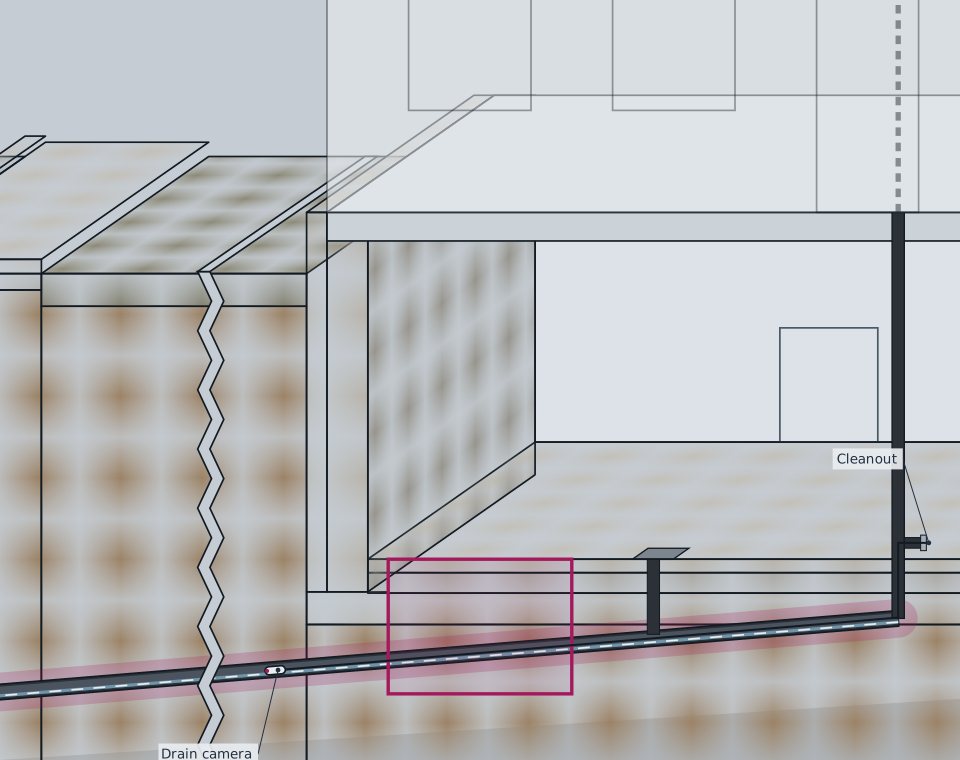
All the water in your house leaves by one main drain under the basement floor. It runs out to the city sewer under the street. We trace its path with a small camera sent in through the cleanout, a capped opening on the pipe.
-
Lift it out
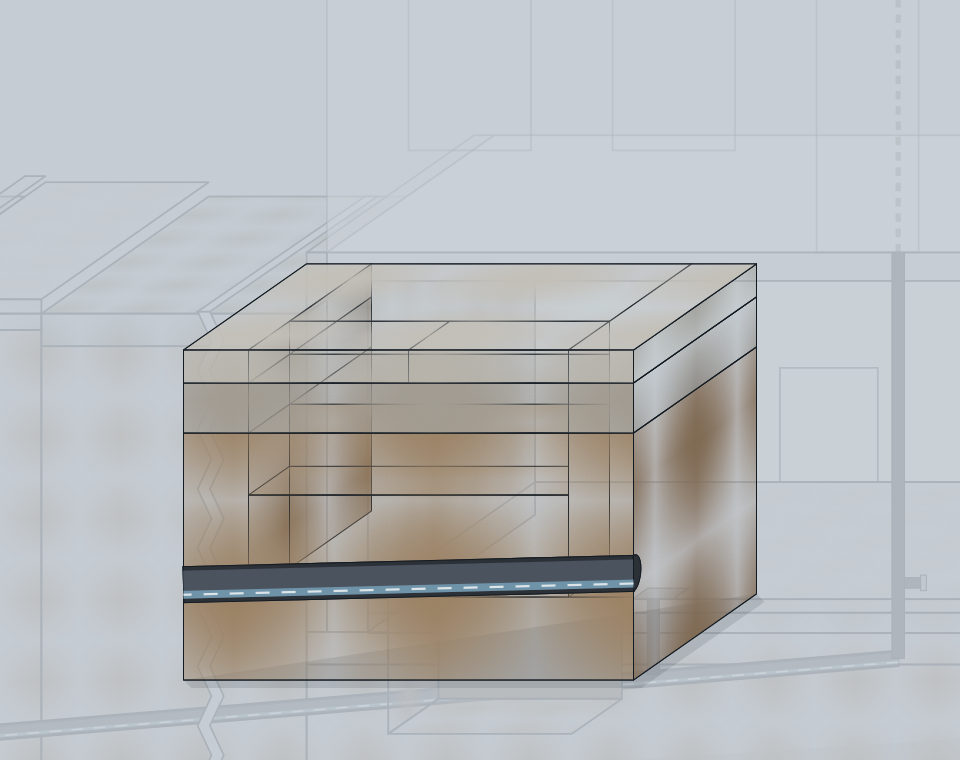
The valve goes on the main drain just inside your front wall, after every drain in the basement has joined it. Here is that spot, up close.
-
Mark and cut the floor
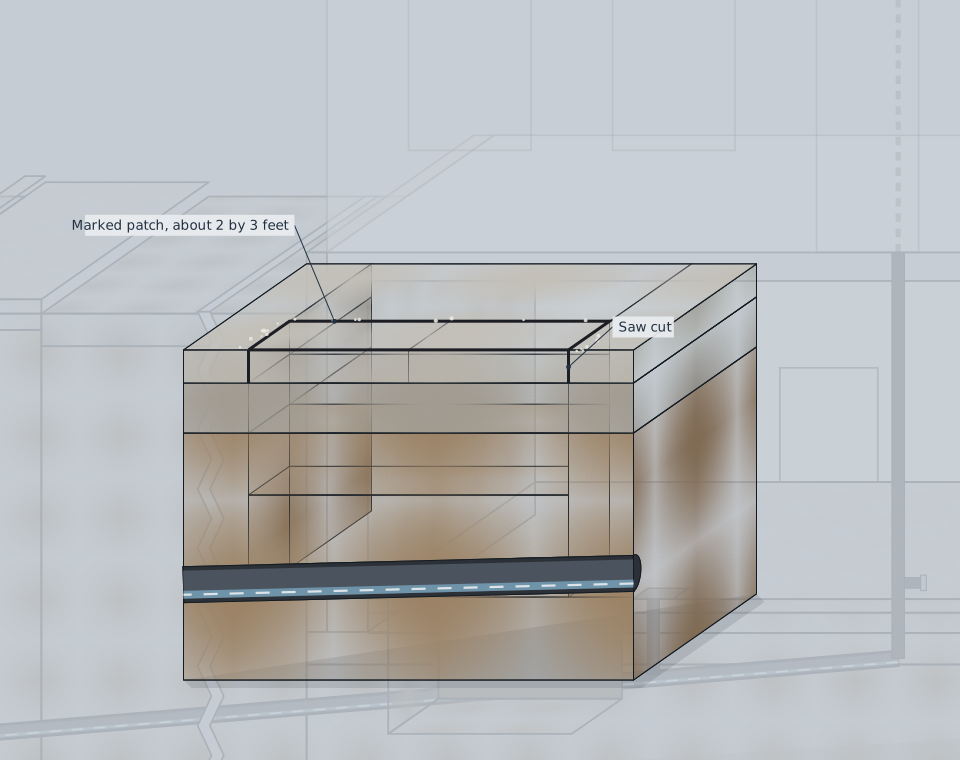
We mark a patch about 2 by 3 feet over the drain and cut along the line with a concrete saw. Your floor is about 4 inches of concrete. Only the marked patch is opened.
-
Break out and dig
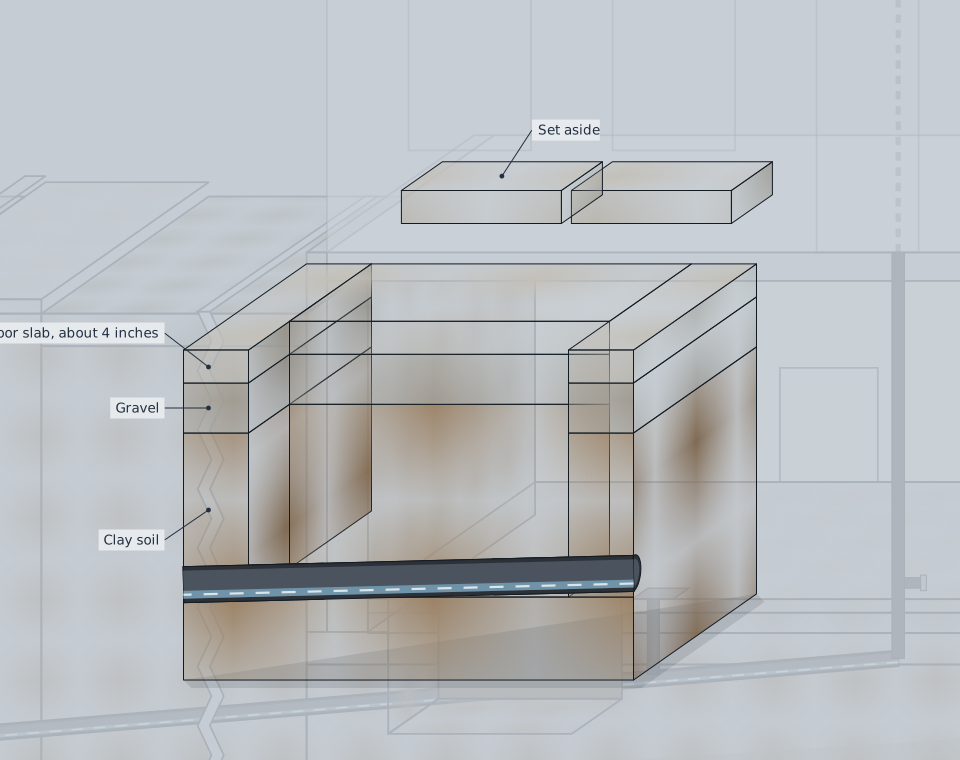
The cut concrete comes out in pieces. Under it is a layer of gravel, then clay soil, down to the drain pipe.
-
Cut out the old pipe
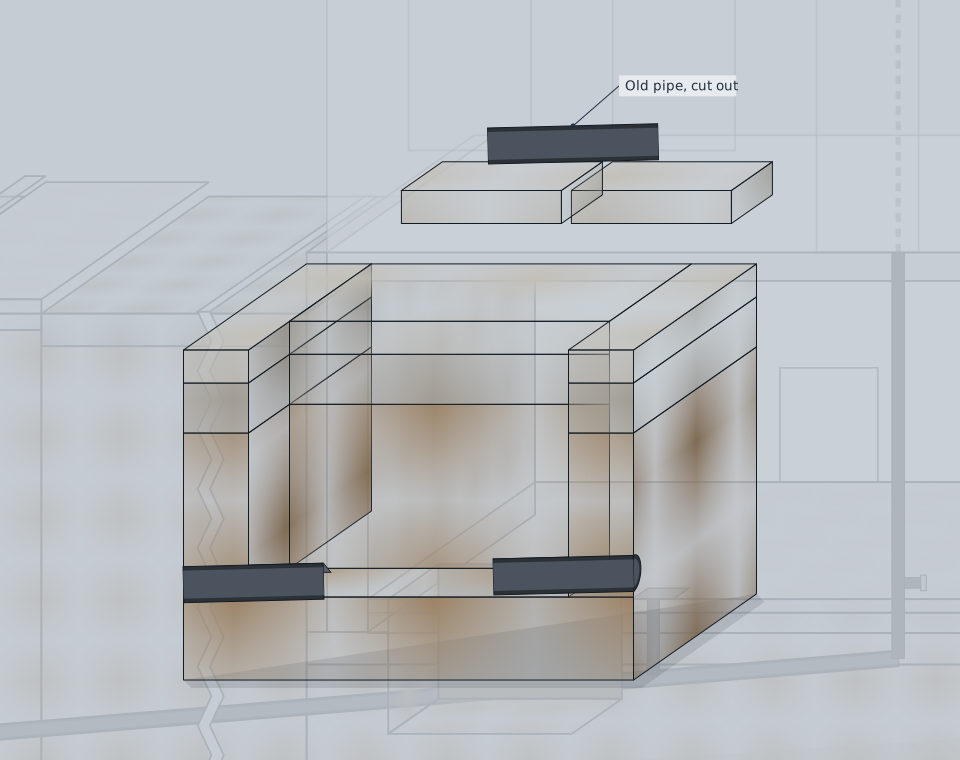
We ask you not to run water for this part. Then we cut out a short piece of the old drain, just long enough for the valve.
-
Set the valve
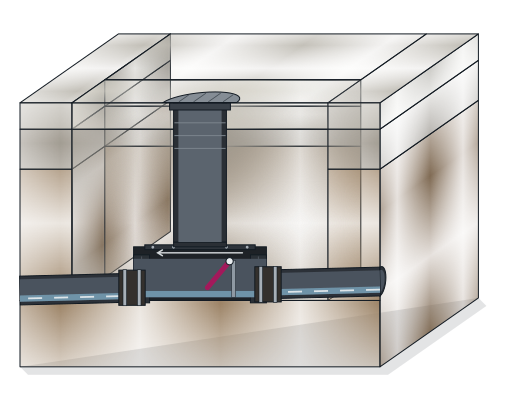
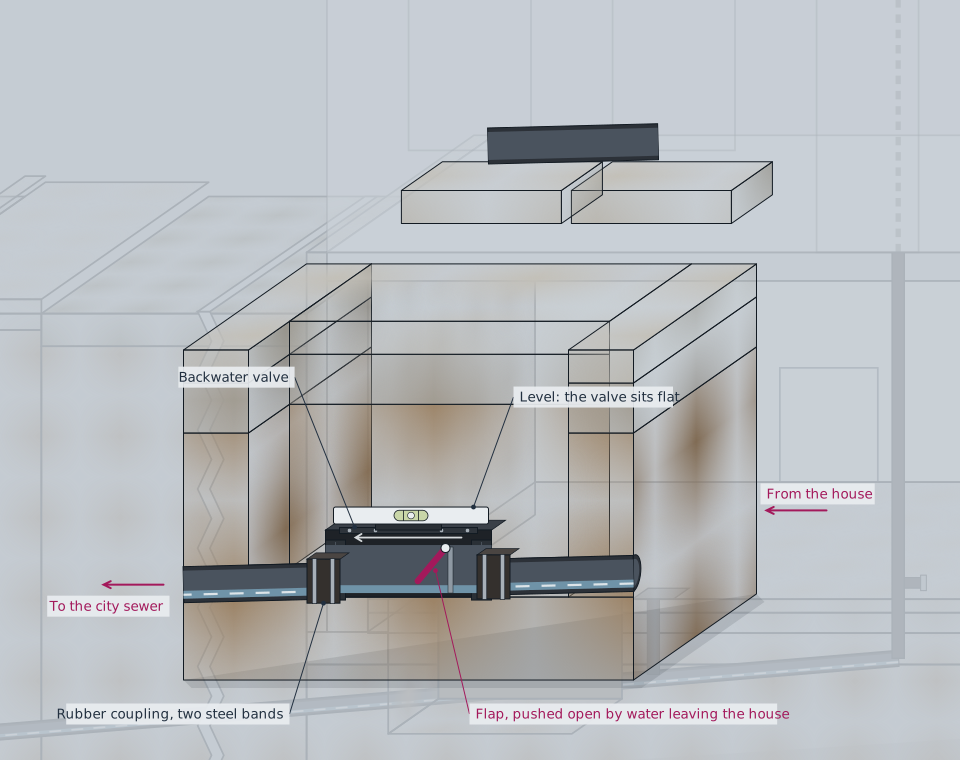
The backwater valve goes in the gap, level, with its arrow pointing to the street. Rubber couplings with steel bands join it to the old pipe. Inside, a flap swings open for water leaving the house.
-
Test and inspect
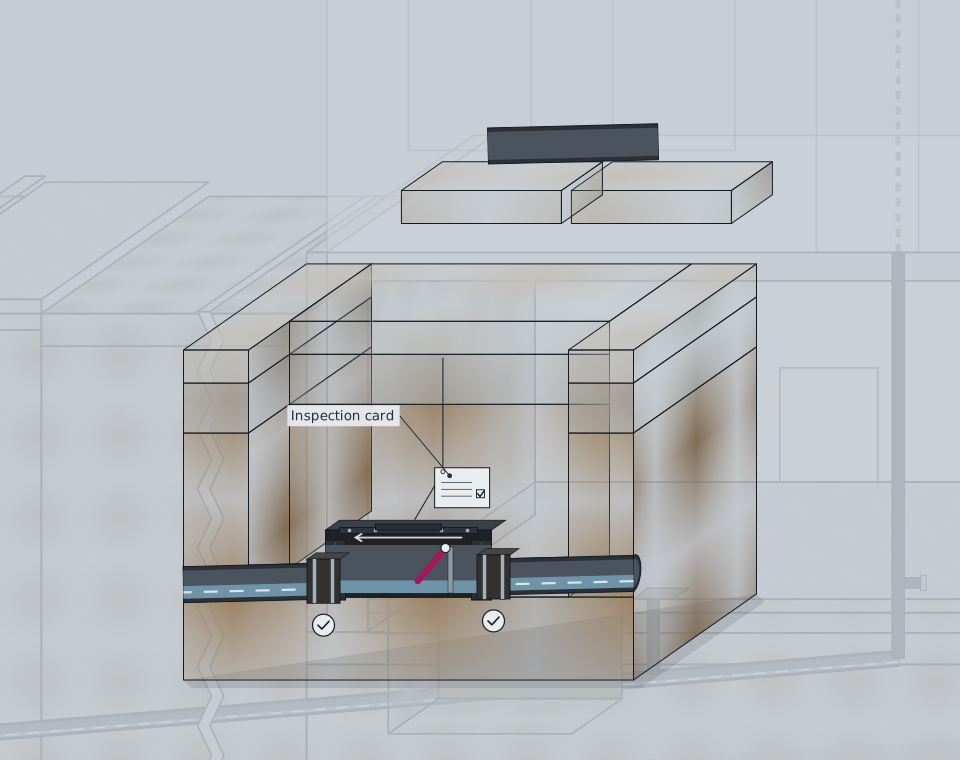
We run water through and check every joint for leaks. Then a city plumbing inspector checks the work while the hole is still open.
-
Fill it back in
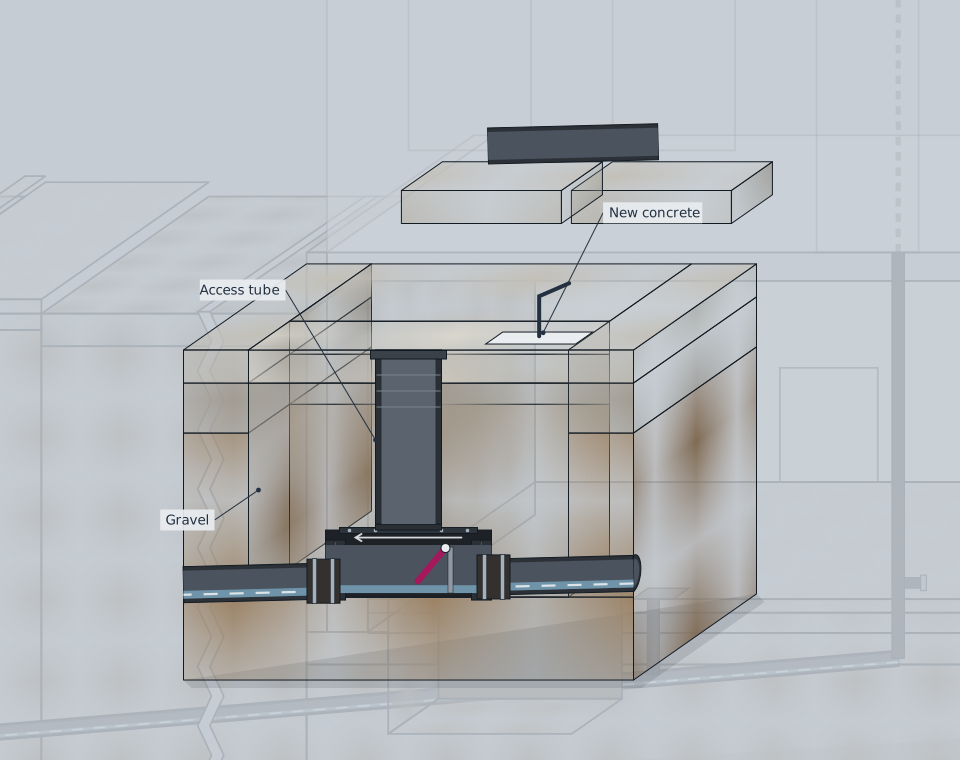
Gravel goes back around the pipe. A short tube rises from the valve to the floor, and new concrete is poured around it, level with your floor.
-
The cover
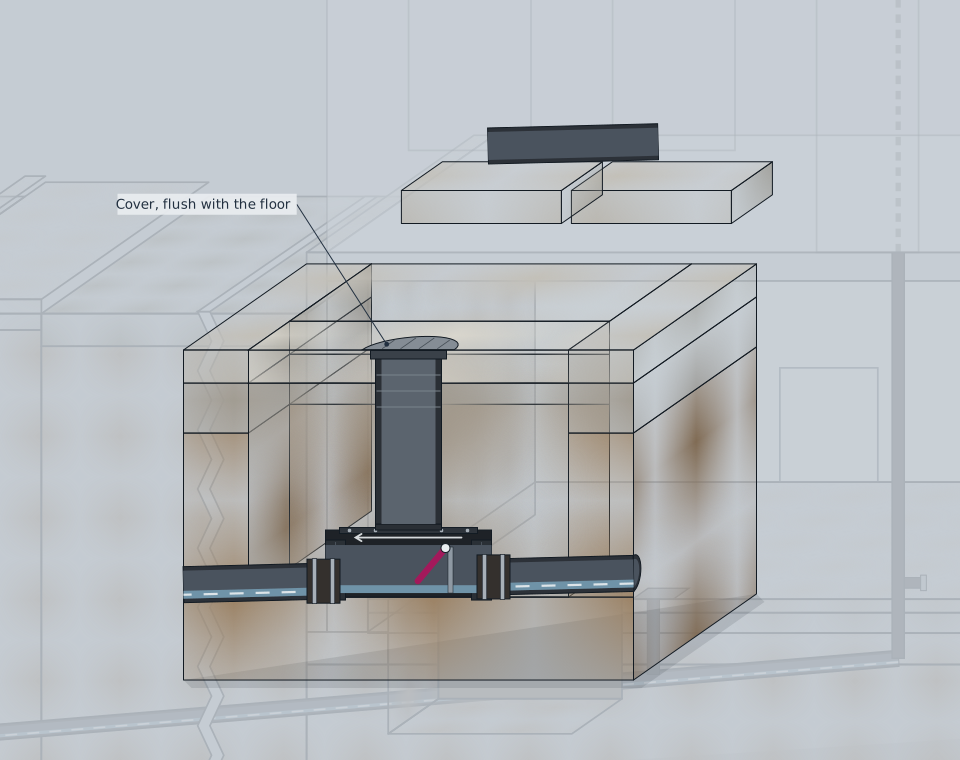
A cover sits flush with the floor over the valve. Lift it to check the flap or clean it.
-
The storm
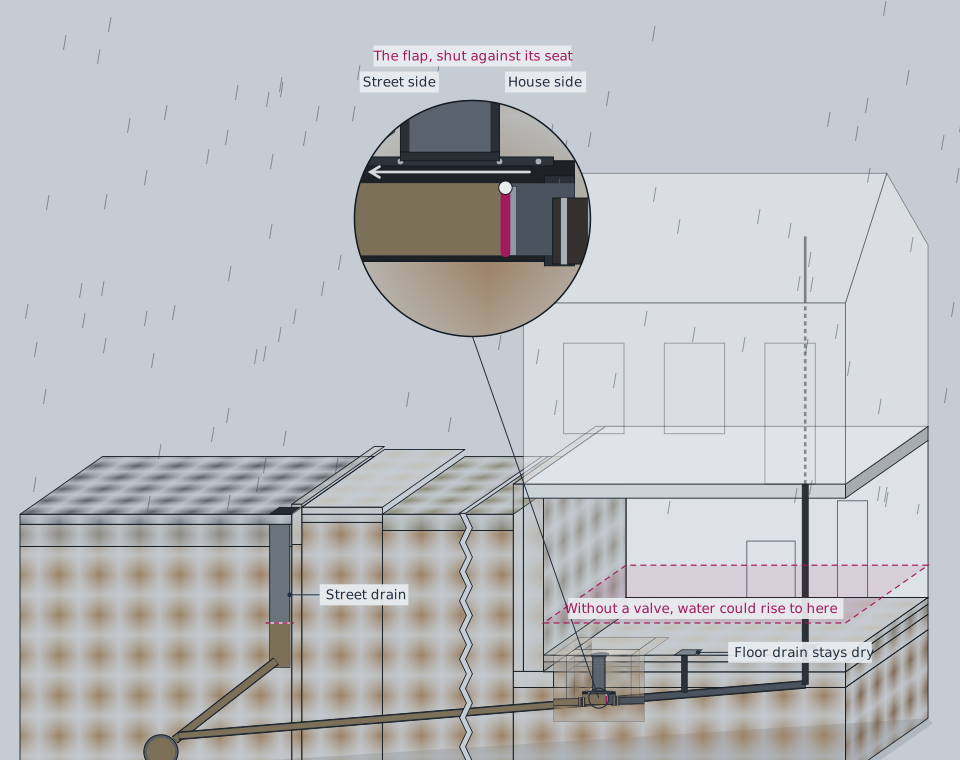
Heavy rain fills the city sewer, and its water rises back up the pipe toward your house. It pushes the flap shut against its seat, so the water stops at the valve and your basement stays dry.
Heavy rain fills the city sewer and pushes water back up the pipe. The sewer water shuts the flap and stops at the valve.
After the storm
When the sewer drains down, the flap swings open and your drains work again. While it is shut, go easy on water: sinks, showers and toilets can’t empty until it opens.


What we fix
| What you notice | What we do |
|---|---|
| A leak or a burst pipe | We find it, shut off the water to it, and repair or replace the pipe. |
| A clogged or slow drain | We clear it. If it keeps coming back, we look inside with a drain camera. |
| Sewer water in the basement | We clear the drain, find the cause, and talk with you about a backwater valve. |
| No hot water | We repair the water heater, or replace it if it is worn out. |
| A frozen pipe | We thaw it safely and repair any split. |
| What you notice | What we do |
|---|---|
| Protecting the basement | Backwater valves and sump pumps, put in under your floor. |
| A new water heater | Tank or tankless, sized for your house. |
| New fixtures | Toilets, taps, sinks and showers. |
| An old water line | We replace the water line and your main shut off valve. |
| A drain you’re not sure about | A drain camera inspection. We show you what we see. |
Is it urgent?
Call it urgent
- Water is spraying or won’t stop
- Sewage is coming up a floor drain, toilet or tub
- You have no water at all
- A frozen pipe has split
It can wait a day or two
- A slow drain
- A dripping tap
- A toilet that keeps running
- Water that is only lukewarm
If water won’t stop, turn off your main shut off valve first. It is usually where the water pipe comes into the basement, near the meter.
Questions homeowners ask
What will it cost?
We look at the job first, then give you a written quote. No work starts until you say yes to it.
Will you show up when you say?
You get an arrival window when you book. If we are running late, we call you before the window ends.
Will you wreck my floor?
We open only what the job needs, cover the area around it, and patch what we open. For a backwater valve, that is one patch about 2 by 3 feet, finished level with your floor.
Do I need a permit?
In Toronto, putting in a backwater valve usually needs a plumbing permit and an inspection. We apply for the permit and book the inspection.
Will a backwater valve keep all water out of my basement?
No. It stops sewer water coming back up the drain. Water coming through the walls or floor needs a different fix, such as a sump pump. We can check which you need.
Where we work
East York, Leaside, the Danforth and the streets around them.
Address and hours go here
Reviews and licence
Your Google reviews appear here
Your licence and insurance line goes here
Placeholders. A real plumber shows their own reviews and licence here.
Book a plumber
Tell us what’s wrong and pick a time. We confirm by phone or email.